Before the first mark.
A drawing starts with a decision about what matters. The first line comes after that.
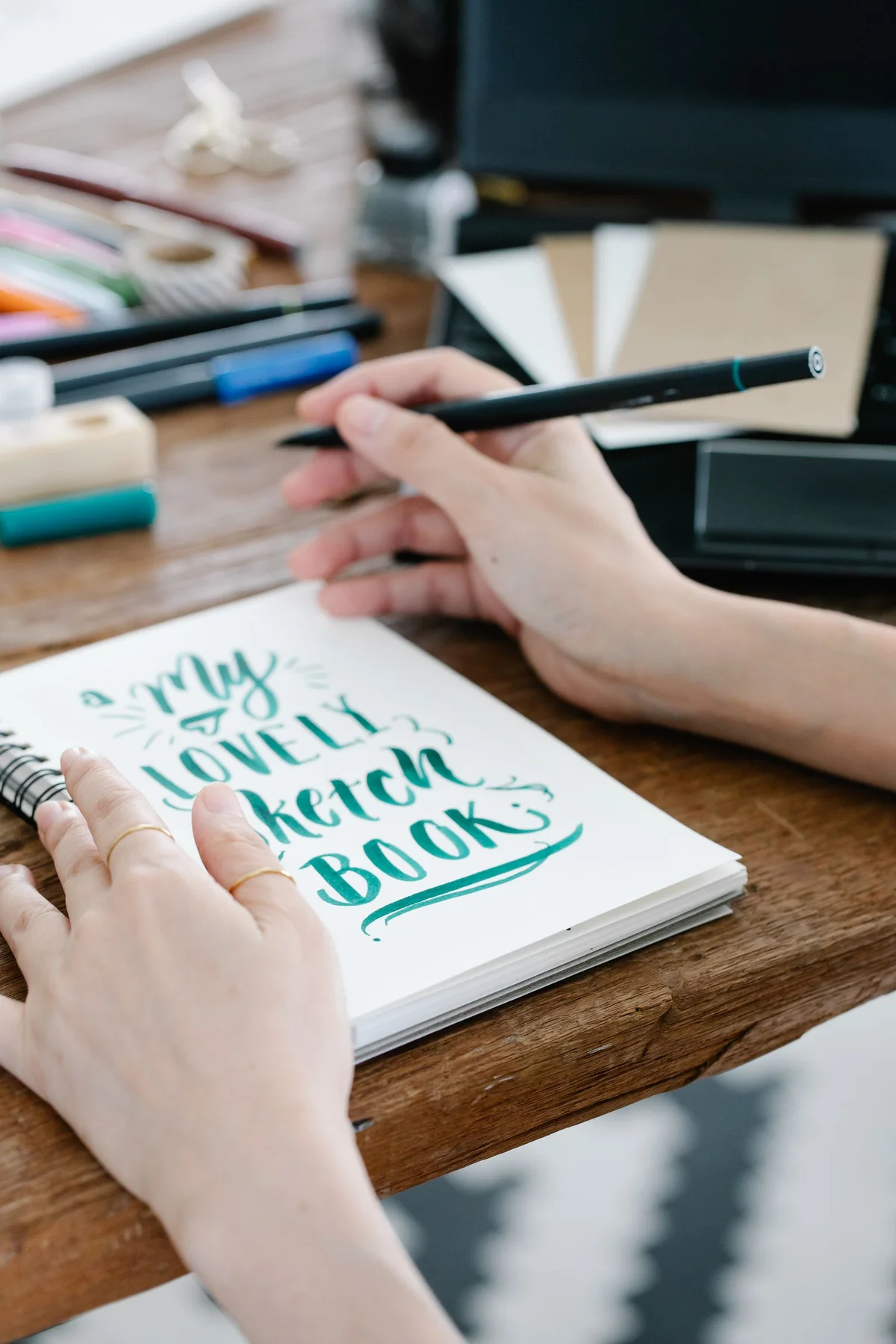
A sketchbook is a place to test attention. Before reaching for a pencil, decide what the image needs to communicate: a gesture, a proportion or the relationship between two shapes. That decision gives the first mark a purpose.
Choose a point of departure
Start with the largest relationship in the frame. Compare the height of the subject with the space around it. Establish a direction before adding detail. A few deliberate marks provide more structure than a page of uncertain outlines.
A useful line describes a decision, not just an edge.
Keep the evidence visible
Leave early construction lines in place while the drawing develops. They record changes in judgement and help explain the final composition. Erasing every correction too soon removes information that the next decision may need.
In response / Your perspective
What do you see?
Share a question, a different reading or a reference this story brought to mind.
Color is a relationship.
A pigment changes when its neighbour changes. Build a palette around relationships rather than isolated swatches.
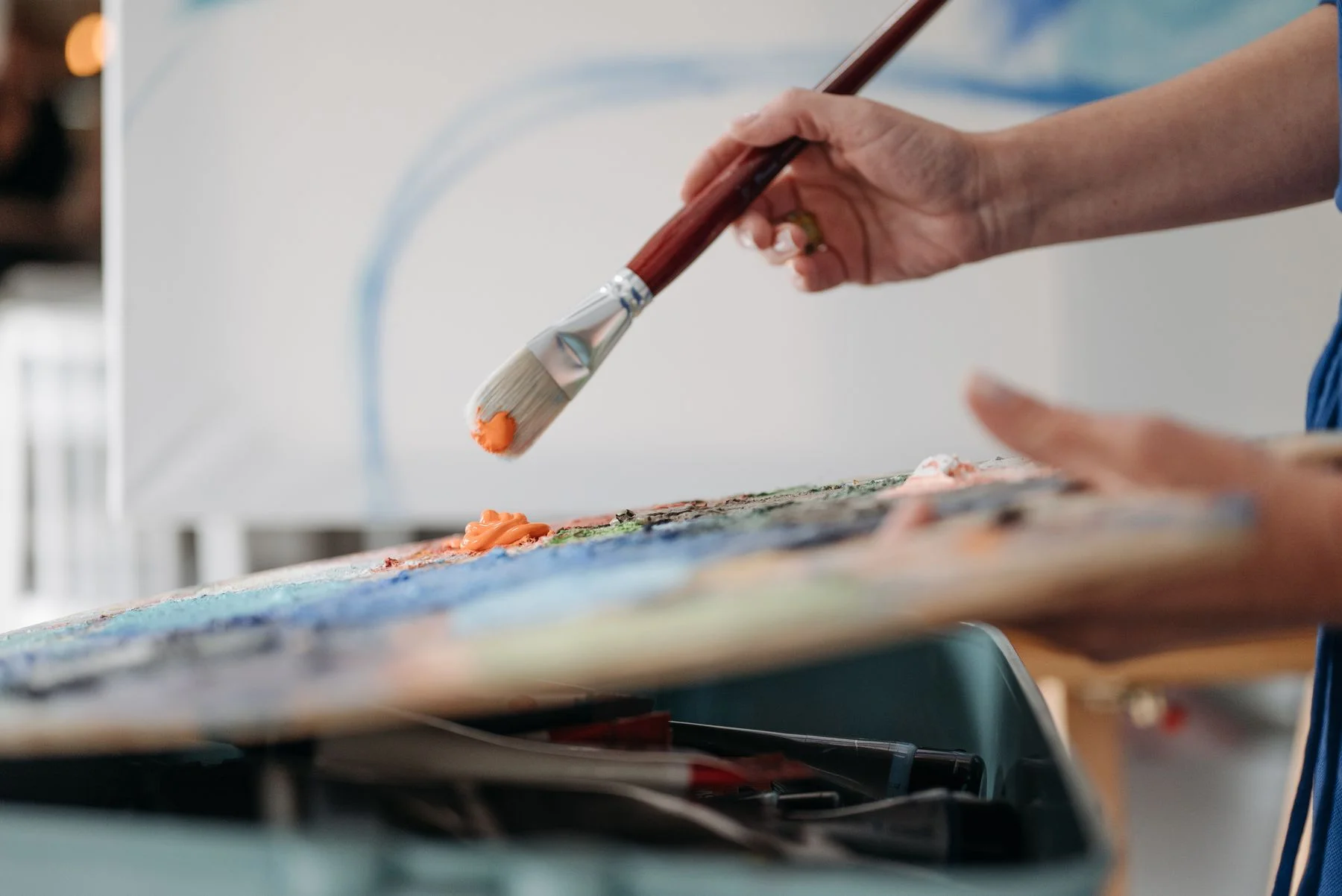
Mixing on a palette is a practical comparison. The same grey can read warm beside blue and cold beside orange. A successful color study accounts for those shifts before the image becomes crowded with competing signals.
Establish the range
Choose a light, a dark and a middle value before introducing more hues. Test each mixture against those anchors. A limited range makes small temperature changes easier to see and gives the composition a consistent visual weight.
The surrounding color is part of the mixture.
Test in context
Place a small amount of the mixture next to the color it will meet in the work. Check the edge, the contrast and the balance of the two areas. The palette provides a starting point; the image provides the final test.
In response / Your perspective
What do you see?
Share a question, a different reading or a reference this story brought to mind.
Work through the revision.
The useful part of a study is often the correction: a changed angle, an adjusted proportion, a stronger structure.
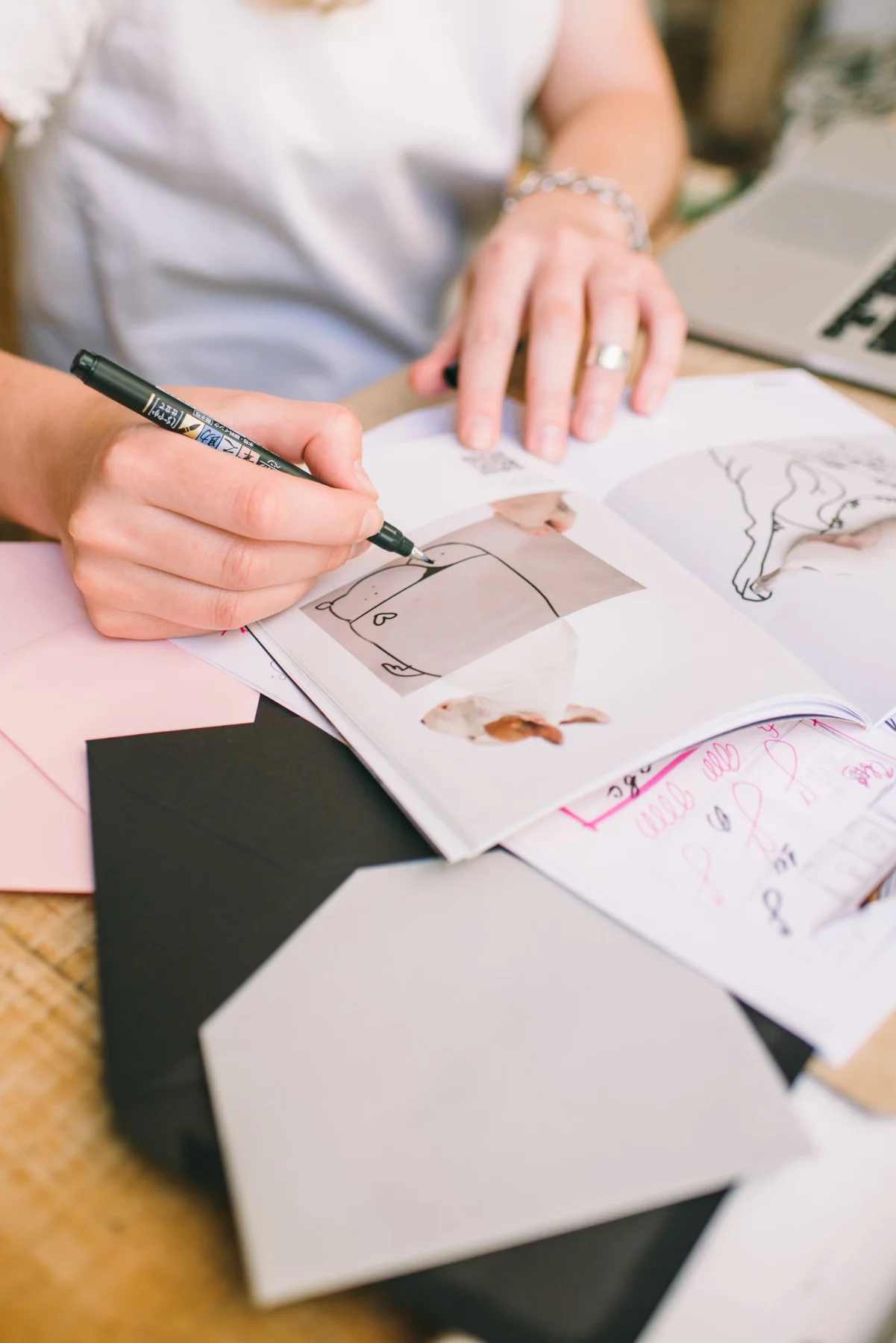
An unfinished drawing keeps the process available for inspection. Marks overlap, proportions shift and alternatives remain visible. Treat this stage as a working document rather than a smaller version of a finished piece.
Change one variable
When the composition stalls, identify a specific problem. Adjust the scale of a shape or the direction of a line. Comparing one change at a time makes the result legible and prevents a sequence of unrelated edits from becoming a new problem.
Revision gives the image its structure.
Know what to carry forward
End the study by naming the decision that worked. It may be a crop, a contrast or a relationship between two forms. Take that finding into the next version instead of reproducing every mark.
In response / Your perspective
What do you see?
Share a question, a different reading or a reference this story brought to mind.
Structure before detail.
A ruler, a pencil and a few measured relationships. A framework that leaves room for the image to develop.
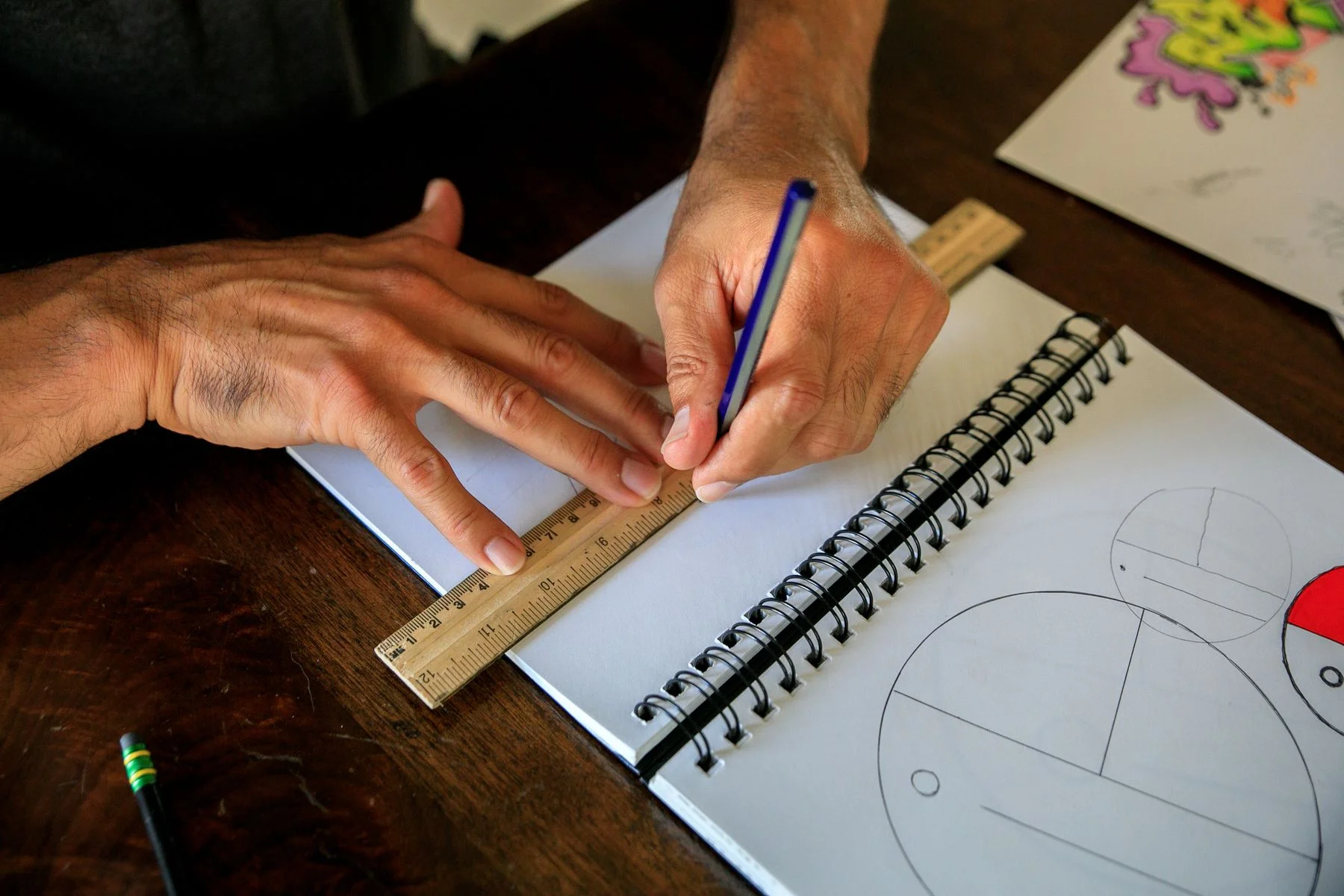
Measurement gives a drawing a set of reliable references. It does not need to determine every edge. A small number of axes and intervals can establish the composition while the rest of the work remains open to observation.
Set the anchors
Mark the main axis, the limits of the subject and one important interval. Compare those points with the space around them. This creates a scale for the drawing and makes later errors easier to locate.
A framework should support the image, not fill it.
Return to observation
Use the framework to check relationships, then look at the subject again. Measured lines are a tool for comparison. The final judgement still depends on how the whole image reads.
In response / Your perspective
What do you see?
Share a question, a different reading or a reference this story brought to mind.
The material has a say.
Paint thickness, brush pressure and the surface beneath them all change the result. Make those variables part of the method.
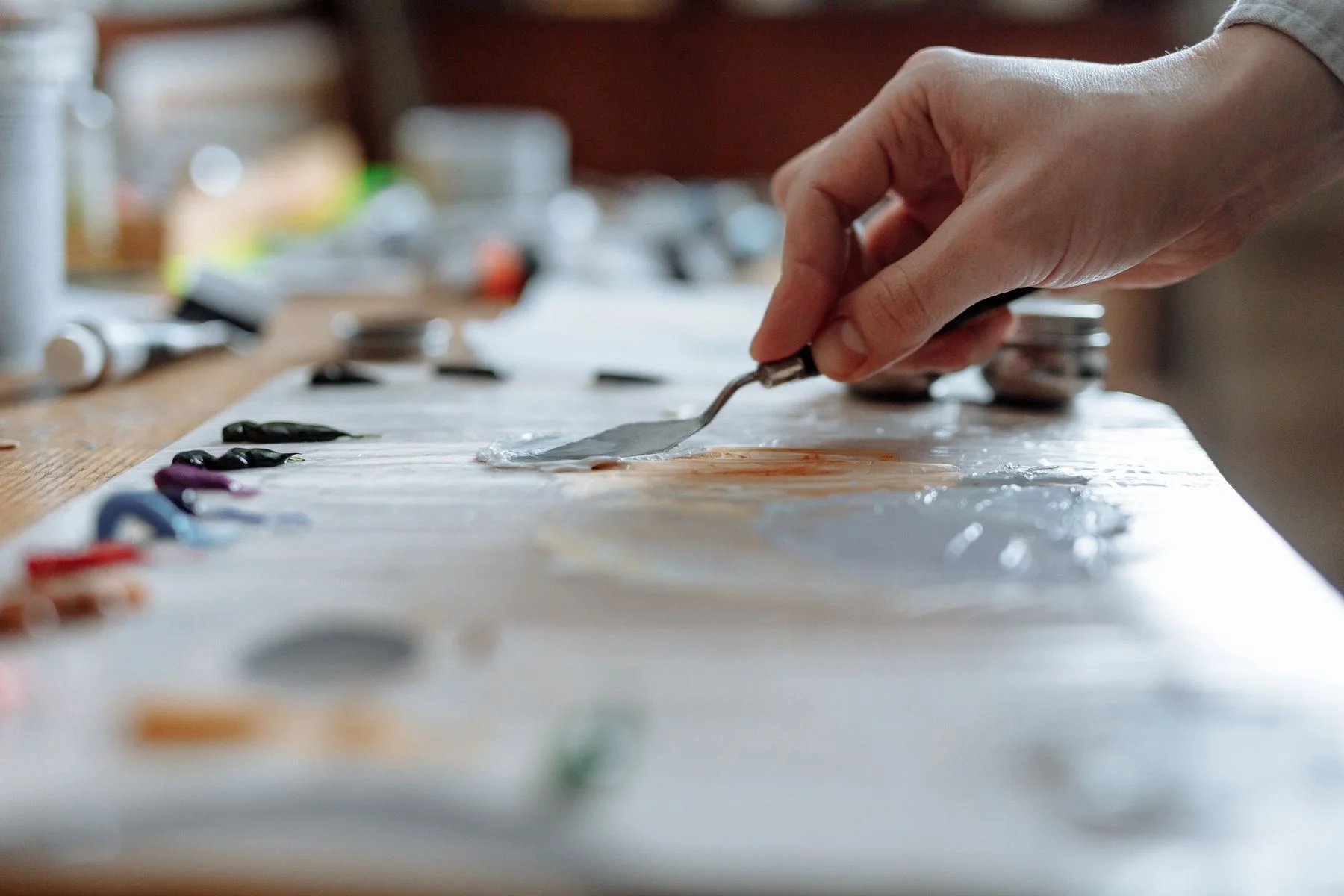
A palette contains more than color. Each mixture has a consistency that affects the mark it can make. Testing the material before committing to a passage helps connect the intended image with the physical action needed to produce it.
Make a controlled test
Keep the pigment constant and change one condition: the amount of medium, the brush or the pressure. Compare the edges and coverage of each mark. A simple test produces information that can be used throughout the work.
Technique begins with knowing what the material will do.
Keep a practical record
Record the mixture and the surface alongside the test. Photograph it in neutral light once dry. These references are useful when a later session needs the same handling rather than an approximation of the same color.
In response / Your perspective
What do you see?
Share a question, a different reading or a reference this story brought to mind.
Before the first mark.
A drawing starts with a decision about what matters. The first line comes after that.
Color is a relationship.
A pigment changes when its neighbour changes. Build a palette around relationships rather than isolated swatches.
Work through the revision.
The useful part of a study is often the correction: a changed angle, an adjusted proportion, a stronger structure.
Structure before detail.
A ruler, a pencil and a few measured relationships. A framework that leaves room for the image to develop.
The material has a say.
Paint thickness, brush pressure and the surface beneath them all change the result. Make those variables part of the method.