
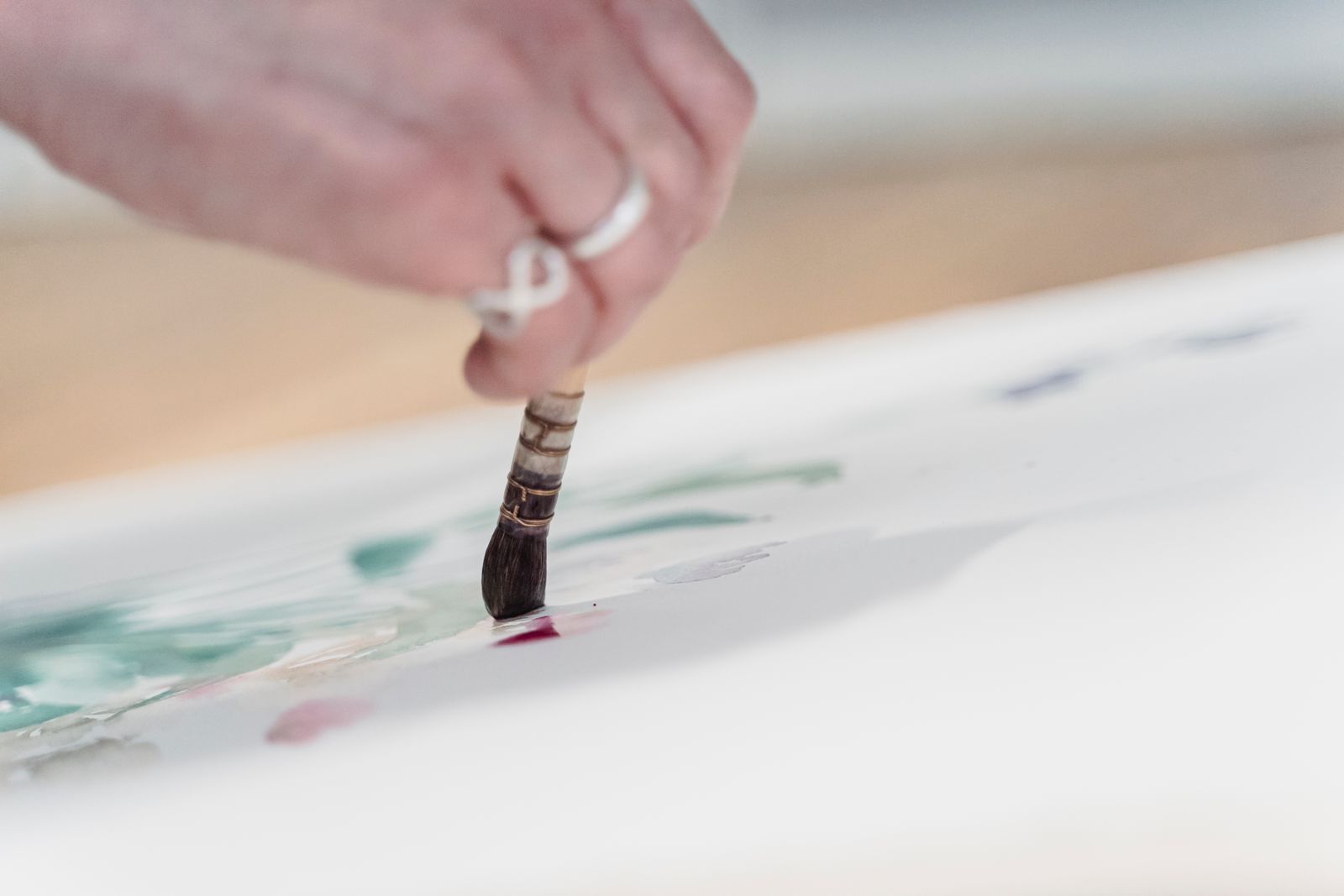
A slower way of seeing.
Some days, the most useful thing to bring to the studio is a little less urgency.
Before a brush touches the page, there is a quieter kind of work. Looking at the light on the table. Noticing the color left in a glass of water. Allowing an ordinary detail to hold your attention for a little longer.
Begin with what is already here
A painting does not always begin with an idea. Sometimes it begins with a relationship: a cool shadow beside warm paper, or the surprising green that appears when two familiar colors meet. These small encounters are easy to miss when the finished image is already fixed in your mind.
Try spending the first few minutes without making a mark. Choose one detail and stay with it. Describe its edges, the spaces around it, and the way it changes when you move. The point is to look closely enough that the familiar becomes interesting again.
Attention is a material, too. Give it room to settle.
Leave a little unfinished
There is a particular generosity in a study that leaves something open. A loose edge invites the eye to continue. A patch of untouched paper gives a wash somewhere to breathe. What is absent can carry as much feeling as the marks themselves.
When the next decision feels forced, set the brush down. Return later, in different light. Sometimes the work needs another mark; sometimes it only needs the space you have already given it.
Correspondence / The studio
Continue the conversation.
A question about the work, a response to this article, or a project you would like to discuss.
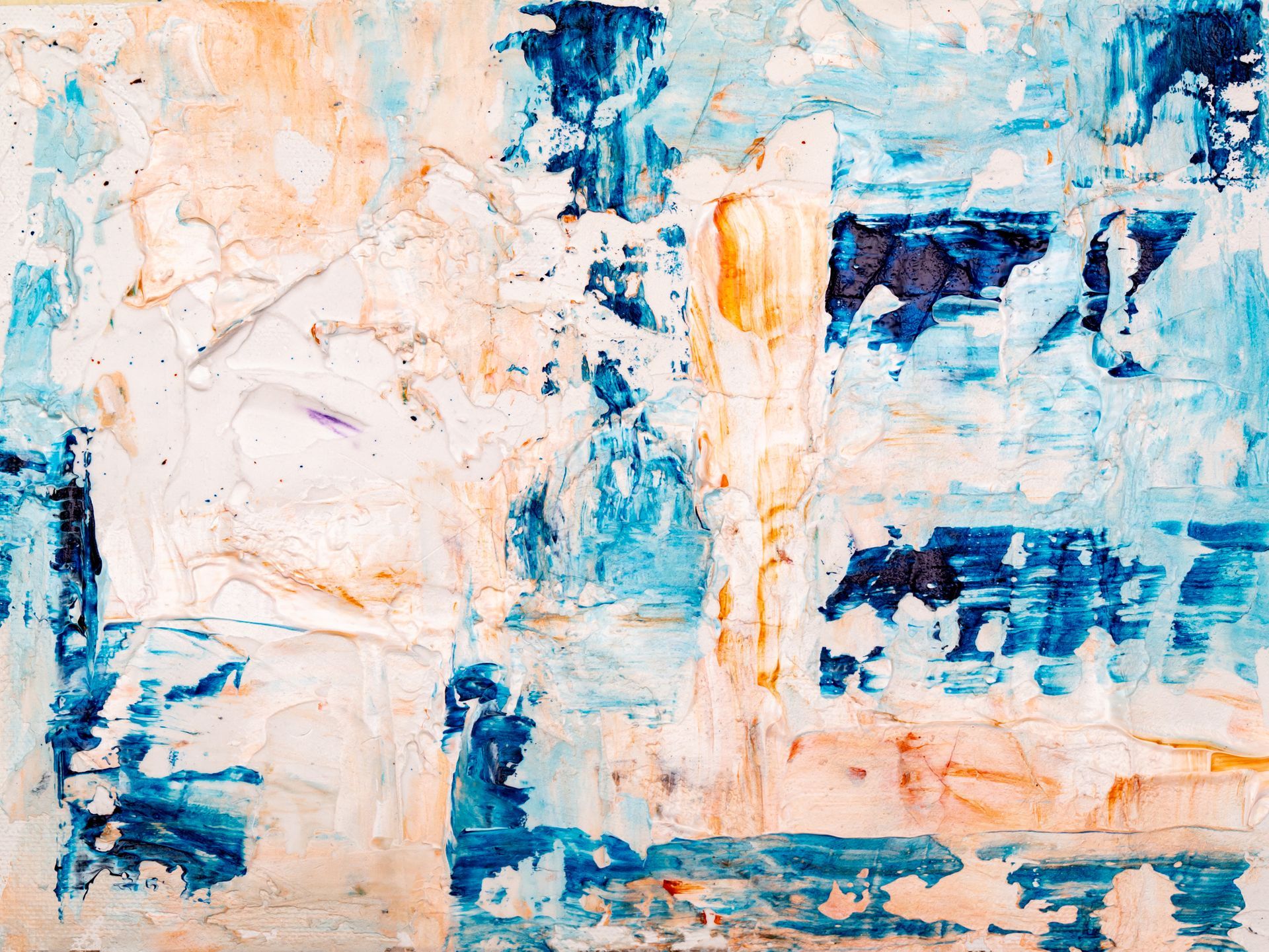
Color relationships in practice.
Between the colors we choose and the colors we discover, a small conversation takes place.
A used palette is a record of decisions. Some mixtures are deliberate; others arrive where two washes meet. The accidental colors are often the ones worth keeping.
Let one color lead
Start with a small family of pigments. Mix a warm version and a cool version of the same tone, then place them beside each other on a scrap of paper. Look at the pair in daylight before deciding which belongs in the work.
The restraint is useful. With fewer choices, a slight shift becomes visible: the violet inside a gray, the green inside an ochre. A limited palette can hold more variety than a crowded one.
A color changes when you give it a different neighbor.
Keep the unexpected mixtures
Make a small swatch before cleaning the palette. Add the pigments beside it in pencil, along with a note about the light. These modest records become a personal vocabulary of color.
Return to the swatches when a new painting needs a beginning. The mixture that seemed too quiet last month might be exactly the note that holds the next composition together.
Correspondence / The studio
Continue the conversation.
A question about the work, a response to this article, or a project you would like to discuss.
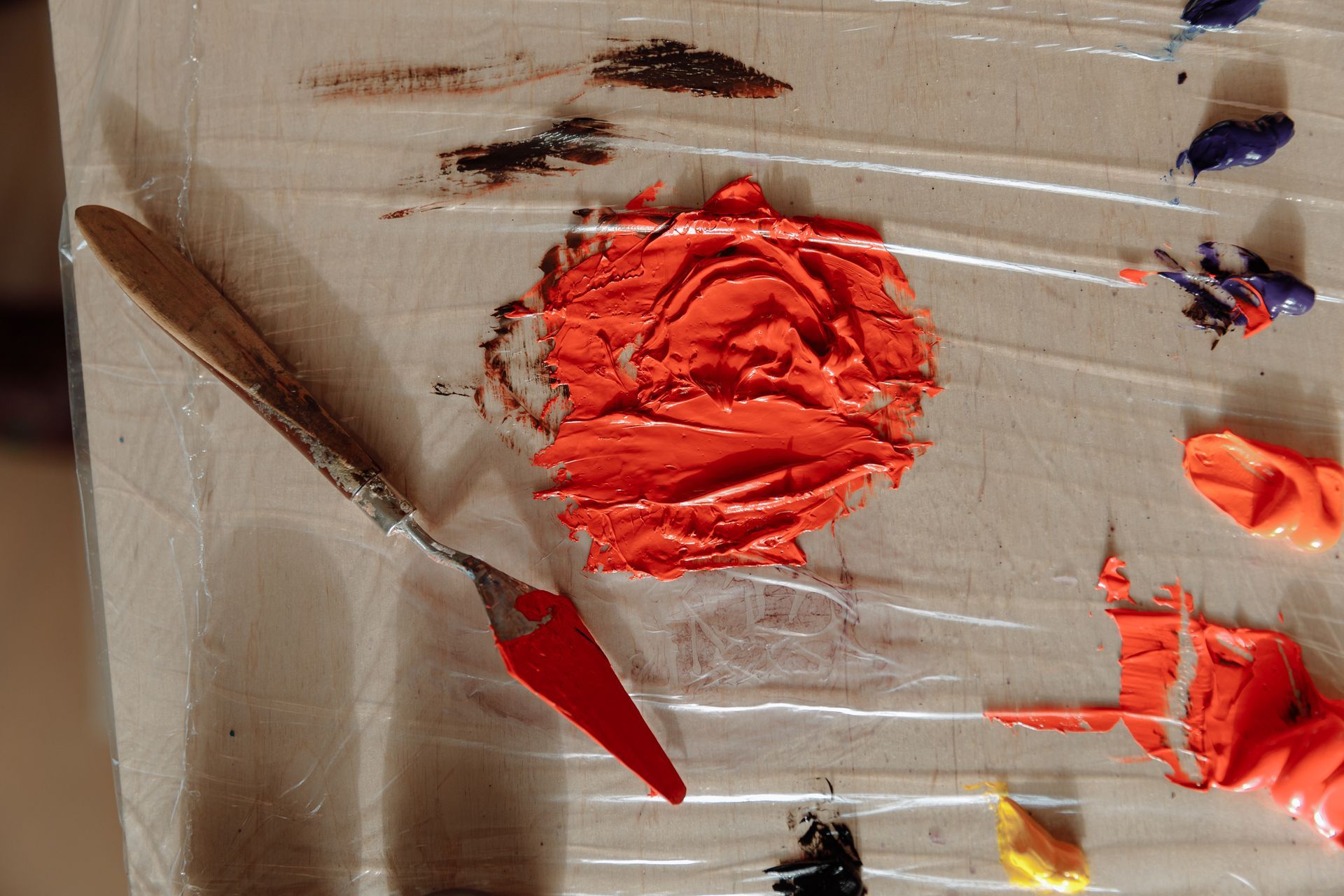
Beginning a new study.
The first mark does not have to know where the rest of the painting is going.
An empty page can feel strangely complete. The first mark interrupts that perfection, and perhaps that is why beginning can be harder than continuing. A study offers a gentler invitation.
Make the question smaller
Instead of planning a whole painting, investigate one relationship. How does a wash dry on this paper? What happens to an edge when the brush holds less water? A small question gives the hand a clear place to start.
Use a loose sheet or the corner of a sketchbook. Work at a scale that allows you to try again without ceremony. The page is there to receive an experiment, not to judge it.
A beginning is a question, rather than a promise.
Notice what the material suggests
Paper has its own pace. Pigment settles into the grain, water gathers at an edge, and an uneven stroke leaves a trace of the hand. Following one of these details can be more useful than correcting it immediately.
Keep the study even if it does not become a finished piece. It may contain a gesture or a texture that belongs somewhere else. Beginning is also a way of collecting possibilities.
Correspondence / The studio
Continue the conversation.
A question about the work, a response to this article, or a project you would like to discuss.
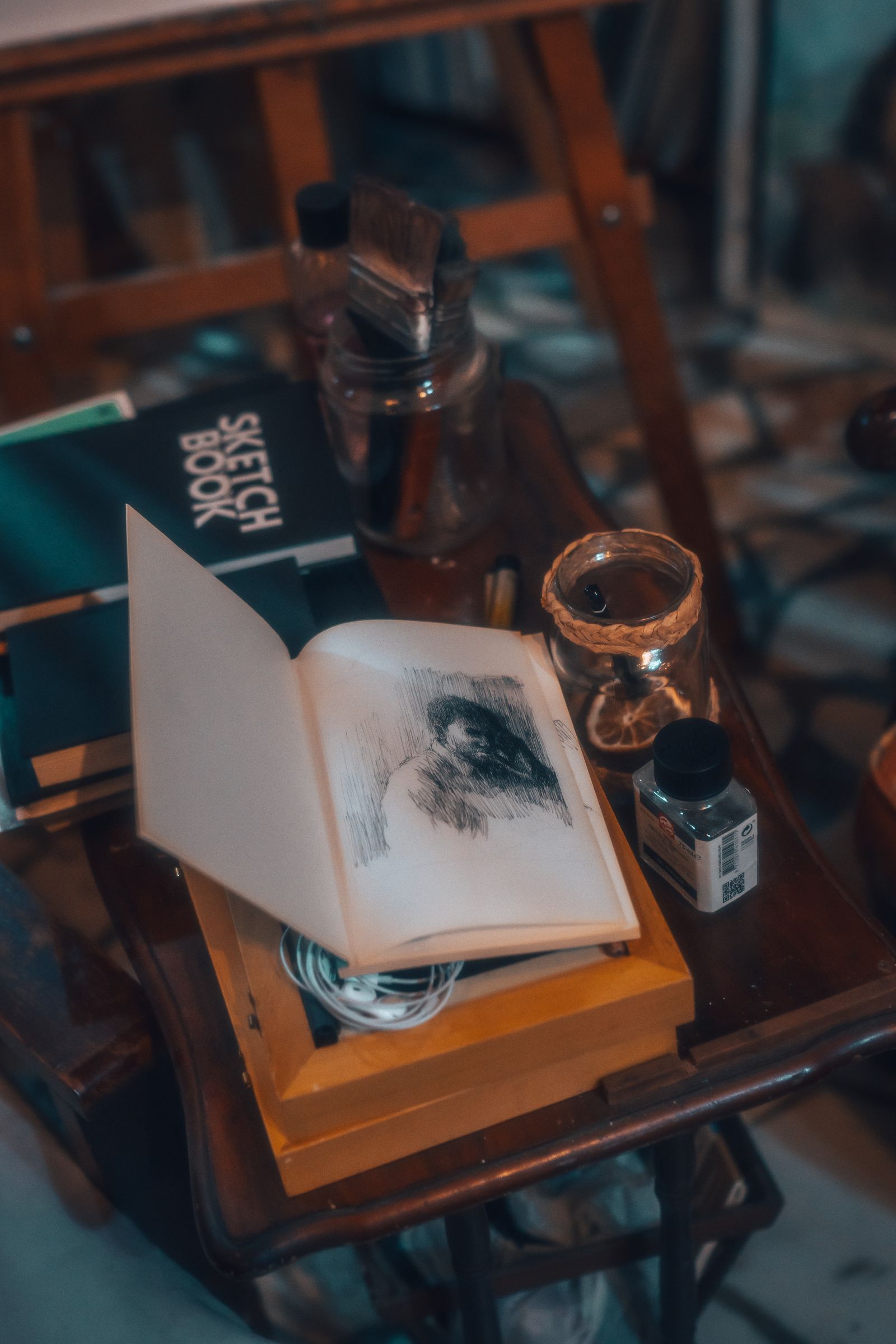
A place for unfinished thoughts.
A sketchbook becomes useful when it stops needing to look like a finished thing.
The pages that matter most are not always the beautiful ones. A repeated line, a note written sideways, a color that did not quite work: these fragments make a sketchbook a companion to practice.
Let the pages disagree
A sketchbook can hold several versions of the same thought. Draw something from memory, then draw it again while looking. Put the two attempts beside each other. Their differences reveal what caught your attention.
Write down sensations as well as shapes. A surface can feel brittle, a color can feel distant, a line can feel reluctant. These private descriptions are useful when you return to the page weeks later.
Keep a page for the things you do not understand yet.
Return without correcting
Resist the urge to improve an old sketch. Add a fresh version on another page instead. Keeping the earlier attempt lets you see the movement of an idea rather than only its final appearance.
Over time, small preferences begin to repeat. You may notice the same curve, the same pair of colors, or the same unfinished edge. The sketchbook quietly shows you what your work is already looking for.
Correspondence / The studio
Continue the conversation.
A question about the work, a response to this article, or a project you would like to discuss.
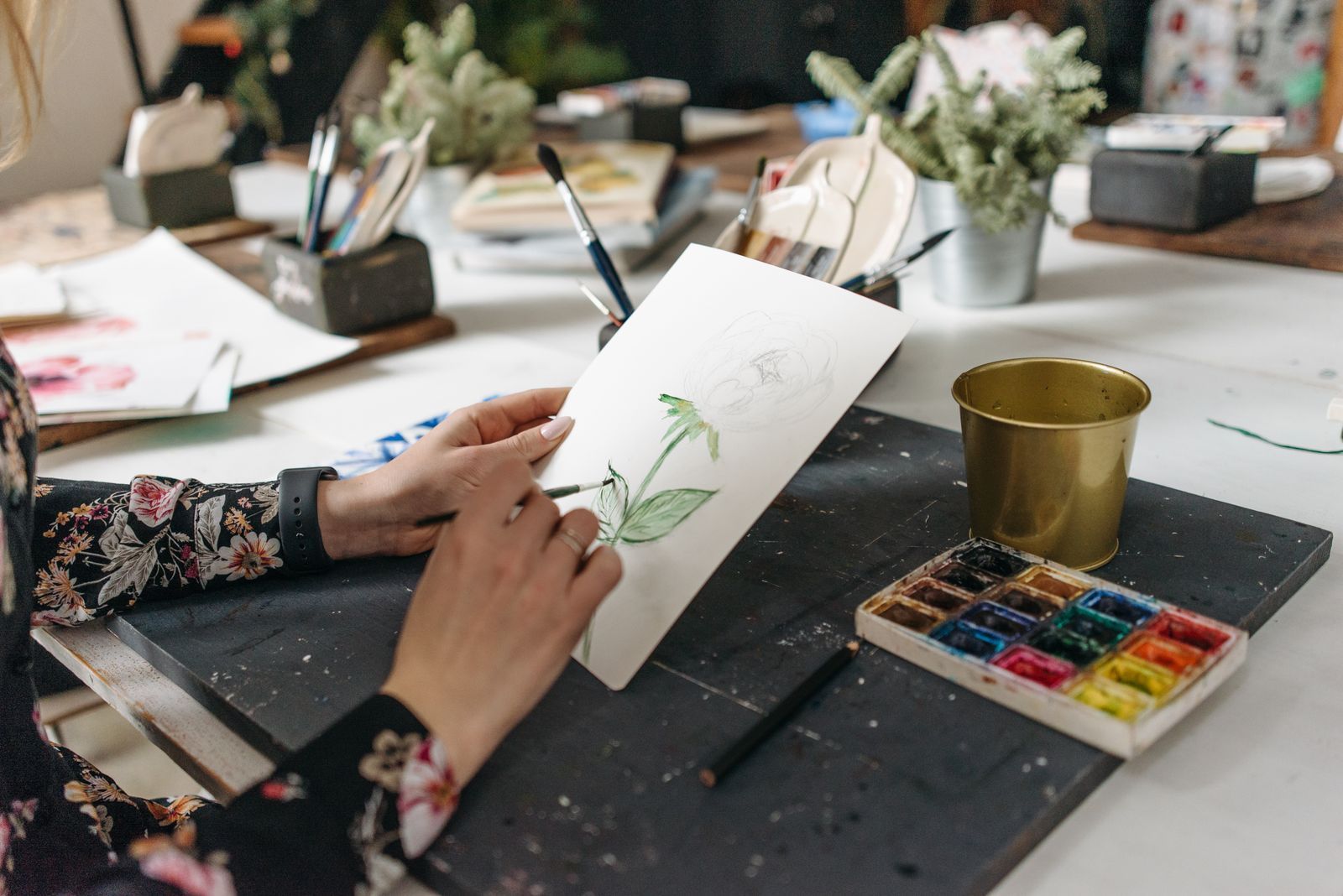
Let the brush lead.
A stem, a leaf, a change of pressure. Sometimes a whole form lives inside one gesture.
A brush can make more than an outline. Pressed into the page and lifted again, it leaves a shape with its own beginning, weight and ending. Learning that gesture changes the way you approach a subject.
Practice the movement
Before drawing a plant, try a row of marks with the same brush. Begin on the tip, press gently, and lift. Change the speed and the amount of water. Notice which movements leave a clear edge and which break into texture.
These marks are not a warm-up to discard. They are the vocabulary of the painting. A single stroke might describe the weight of a leaf more clearly than a carefully filled outline.
Follow the shape of the gesture before the shape of the leaf.
Allow the subject to stay alive
Plants rarely repeat themselves perfectly. Let the stems lean, vary the spaces between leaves, and leave room for a few uncertain edges. The irregularities give the arrangement its sense of growth.
When a stroke surprises you, look before you change it. A bloom of pigment or a dry edge may hold exactly the movement you were trying to describe.
Correspondence / The studio
Continue the conversation.
A question about the work, a response to this article, or a project you would like to discuss.
A little more to sit with
Keep a few pages open.